Importance of Financial Literacy for Kids
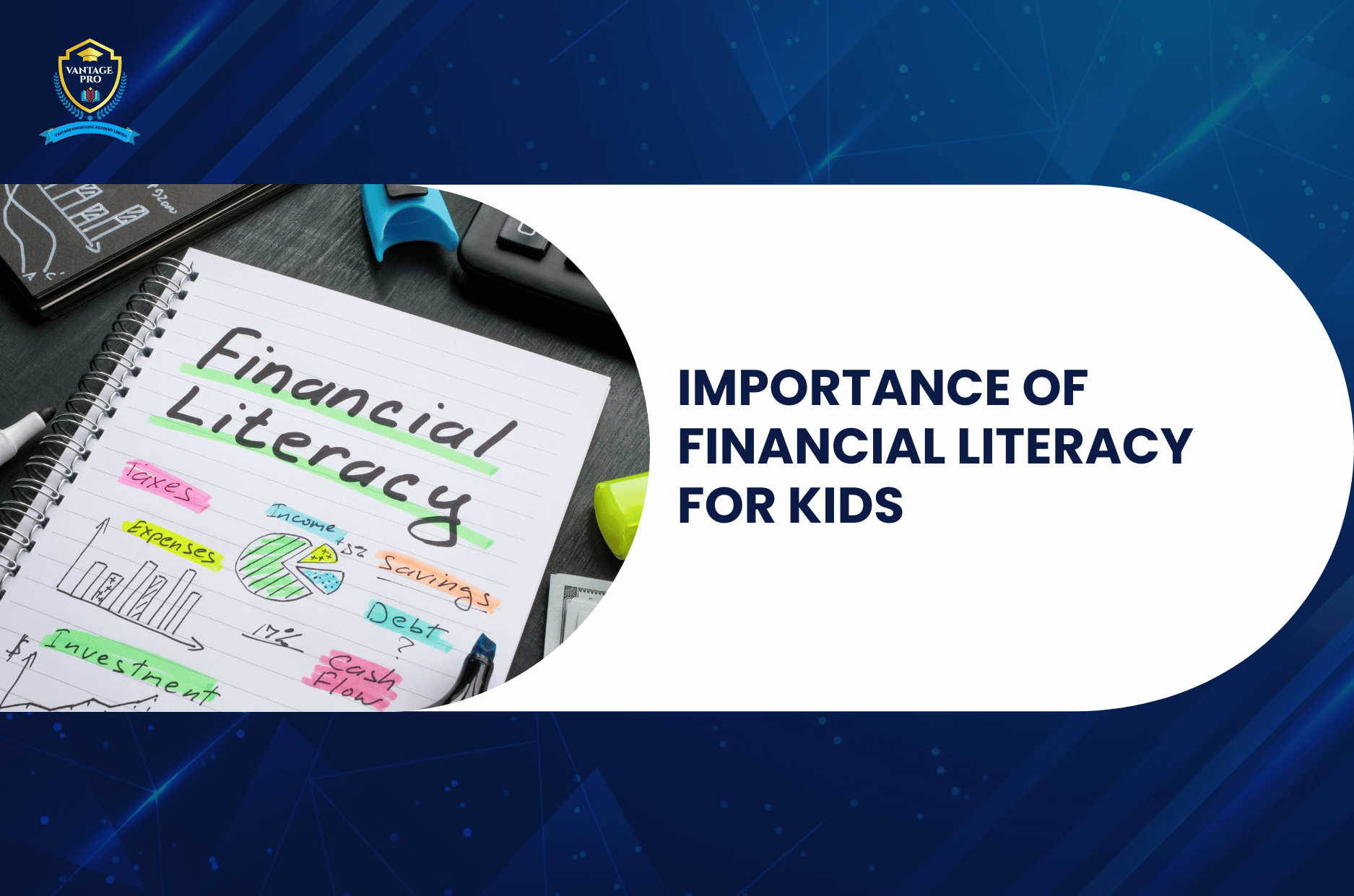
Consider this: Your child approaches you and says, "I've saved enough money for that—now let me show you how I budgeted for it," rather than demanding the newest toy. Does that sound like a dream? It should be the new normal, in our view at Vantage Knowledge Academy. Financial literacy is a superpower that children may begin using right now; it's not only a skill for adults! One of the most crucial skills the next generation will require is financial literacy, which is why we at Vantage Knowl...
Consider this:
Your child approaches you and says, "I've saved enough money for that—now let me show you how I budgeted for it," rather than demanding the newest toy. Does that sound like a dream? It should be the new normal, in our view at Vantage Knowledge Academy. Financial literacy is a superpower that children may begin using right now; it's not only a skill for adults!
One of the most crucial skills the next generation will require is financial literacy, which is why we at Vantage Knowledge Academy are committed to equipping them with the expertise and skills they require to succeed in life.
You may be asking yourself, "Wait, isn't money stuff only for adults?" Not really, though! Early financial education can influence children's financial attitudes for the rest of their lives. While budgeting and currency counting are important aspects of it, they are not the only things involved. Giving children the skills they need to make wise decisions in a world that is becoming more complicated is the goal of financial literacy.
1. The Foundations of Clever Decision-Making
A child is beginning to learn about money the instant they can tell the difference between a penny and a dollar. However, knowing how money functions is more important than simply being able to identify coins. When it comes to saving, spending, and even sharing, financial literacy gives children the skills they need to make better decisions. Consider the impact it has on children to learn about "needs vs. wants," or the way interest on savings accounts can increase over time.
It's similar to laying the foundations for their future. The ability to make financial decisions will accompany kids throughout their lives, whether they are saving for a larger goal or grabbing a toy.
2. Assisting Children in Becoming Wise Business Owners
You've undoubtedly seen a child's developing entrepreneurial spirit if you've ever heard them declare, "I want to be rich!" or "I'm going to start my own business." However, if they establish their own bake sale or lemonade stand, do they have any idea how to handle money?
Children that are financially literate are better equipped to transform their ideas into profitable endeavours. People stop being mere ideals once people grasp ideas like cost, profit, and investment. They start acting.
Who knows? With a strong grasp of money management, today's kid with a lemonade stand could become tomorrow's software company tycoon!
3. Developing Financial Independence as a Child
Knowing that you can control your finances and take charge of your financial destiny gives you a tremendous sense of empowerment. Even at an early age, financial literacy fosters a sense of independence in children. They are able to make more independent choices when they are able to manage their allowance, create a savings plan, or even comprehend the idea of debt.
This independence is about teaching children accountability and responsibility, not just about making money. They gain confidence and a sense of control over their lives as a result of being able to perceive the long-term benefits of their choices.
How to Engage Children in Financial Education?
Presenting the Three-Piggy Bank System:
Children should be taught to split their money into three categories:
Save: For long-term objectives (such as a toy).
Spend: For short-term desires (such as minor treats or snacks).
Share: To donate to a worthy cause or assist others.
Play Games for Money:
Use entertaining board games like Monopoly or The Game of Life to teach lessons about investing, saving, and spending.
Promote Small Enterprises:
Encourage your child to launch a small company, such as setting up a lemonade stand or selling handcrafted goods. They will understand the importance of earning money and working hard.
Engage Them in the Budgeting Process:
Give them a modest budget and let them choose what they want to buy when they go grocery shopping. This aids in their comprehension of costs and priorities.
The Significance of Financial Literacy
1. Increases Self-Belief
Imagine a teenager handling their first paycheck with assurance and without having to ask, "What’s a budget?" The power of financial knowledge lies in that! Children who learn the fundamentals of money management, such as how to prioritise, save, and spend, feel more confident about their financial choices. When presented with practical difficulties, like establishing a bank account or organising a trip with friends, they won't lose their cool. Instead, knowing they have the knowledge to deal with these situations, they will confidently traverse them.
2. Encourages Accountability
Early financial education teaches children that money doesn't just appear in wallets or on credit cards. They are aware that it takes work to earn money, and that it is even more crucial to spend it carefully.
For instance:
A child will reconsider spending their allowance on games or candy if they are saving for a new toy.
When they observe how long it takes to save enough for their ideal item, they will also recognize the importance of hard effort.
They become more responsible as a result of this realization that every rupee spent should be in line with their priorities and aspirations.
Summary
Handing children financial literacy is similar to handing them a life treasure map. They will open the door to financial stability and freedom sooner rather than later if they can read it! Thus, begin modestly, make it enjoyable, and observe as they develop into self-assured, accountable, and financially astute people.
Consider this:
Wouldn't you like your youngster to learn about money today so they can steer clear of financial blunders later on? They can be empowered for the rest of their lives by the teachings you give them today!
Today, take the first step.
Our goal at Vantage Knowledge Academy is to support families in fostering financial literacy in their children. To put your child on the road to financial success, look into our programs!
Beginning today, let's transform those ₹100 notes into lessons that will change your life!
Related Articles

The future of Investment Banking in India through CGIB
Technological developments, regulatory changes, global economic uncertainty, and growing markets like India are all contributing to the fast evolution of the investment banking scene. Careers in specialist fields including financial markets, insolvency and restructuring, and mergers and acquisitions (M&A) are expected to see substantial increase as the 2020s progress. Certifications such as the Chartered Global Investment Banker (CGIB) program can assist you in developing the combination of f...

How NISM certifications can be advantageous for yoHow NISM certifications can be advantageous for your professional and personal life.ur professional and personal life.
A degree alone won't cut it in India's rapidly expanding financial services industry. Supported by the Securities and Exchange Board of India, the National Institute of Securities Markets (NISM). Certifications provide a legitimate and useful means of establishing credibility, opening doors, and gaining long-term advantages in both your personal and professional financial life. NISM, which was founded by SEBI in 2006, offers a range of certification tests that span topics such as research ana...

What is Technical Analysis, CMT and how can it benefit you?
Technical analysis knowledge, and particularly CMT, gives you a significant advantage in a variety of finance-related jobs: Better trading decisions — Technical analysis helps you timing the market better, detect trends early, avoid large losses with stop-losses, and choose when to buy or sell, regardless of whether you're a long-term investor, swing trader, or day trader. Stand out in job interviews – Chart-savvy individuals are needed for many positions on trading desks, hedge funds, invest...